

Automated clearinghouse services are the electronic systems that move money between U.S. bank accounts in batches. They power payroll, bill pay, and recurring charges. For payment providers and software platforms, understanding ACH is the baseline for any broader payment strategy.
Quick answer: Automated clearinghouse services route bank-to-bank credits and debits through the ACH network. Payments are batched, sent through an operator, and settled between banks, usually in one to two business days.

A finance team reviews bank transfer activity handled through automated clearinghouse services.
What Are Automated Clearinghouse Services?
Automated clearinghouse services are electronic processing systems that clear and settle bank-to-bank credits and debits in the United States. ACH stands for Automated Clearing House. The network handles direct deposits, vendor payments, and recurring consumer billing.
The rules come from Nacha, which governs the ACH network. The Federal Reserve and The Clearing House act as operators. You can read more at the Federal Reserve website.
How ACH Payments Work Step by Step
Several parties take part in every transaction. The originator starts it, the originating bank (ODFI) sends it, and the receiving bank (RDFI) posts it. Follow the sequence below.
- Collect authorization. The customer approves the payment and shares account details. The business keeps proof of that approval.
- Submit to the ODFI. The business sends the instruction to its bank, which formats it as an ACH entry.
- Route through an ACH operator. Entries are batched, sorted, and passed to the receiving banks.
- Post at the RDFI. The receiving bank checks the account and posts the credit or debit, or returns it.
- Settle funds. Banks settle with each other, and the merchant sees the deposit.
ACH Credits vs. ACH Debits
An ACH credit pushes funds from the payer to the receiver. Payroll is a common example. An ACH debit pulls funds from the payer’s account after the payer authorizes it. Utility bills and subscriptions often use debits.
The distinction matters for risk. With debits, the payer’s bank can return the entry, so the merchant carries more exposure.
Speed, Cost, and Risk Considerations
| Factor | What to know |
|---|---|
| Speed | Standard ACH often takes one to two business days. Same Day ACH is available through participating banks. |
| Cost | Fees vary by provider and volume. Ask for a written fee schedule. |
| Returns | Entries can be returned for reasons such as insufficient funds. Return windows differ by reason. |
| Security | Nacha rules require protection of account data. Provider controls still matter. |
Common Mistakes to Avoid
First, weak authorization records create disputes. Second, skipping account validation raises return rates. Finally, ignoring return reason codes hides patterns that signal fraud or poor data quality.
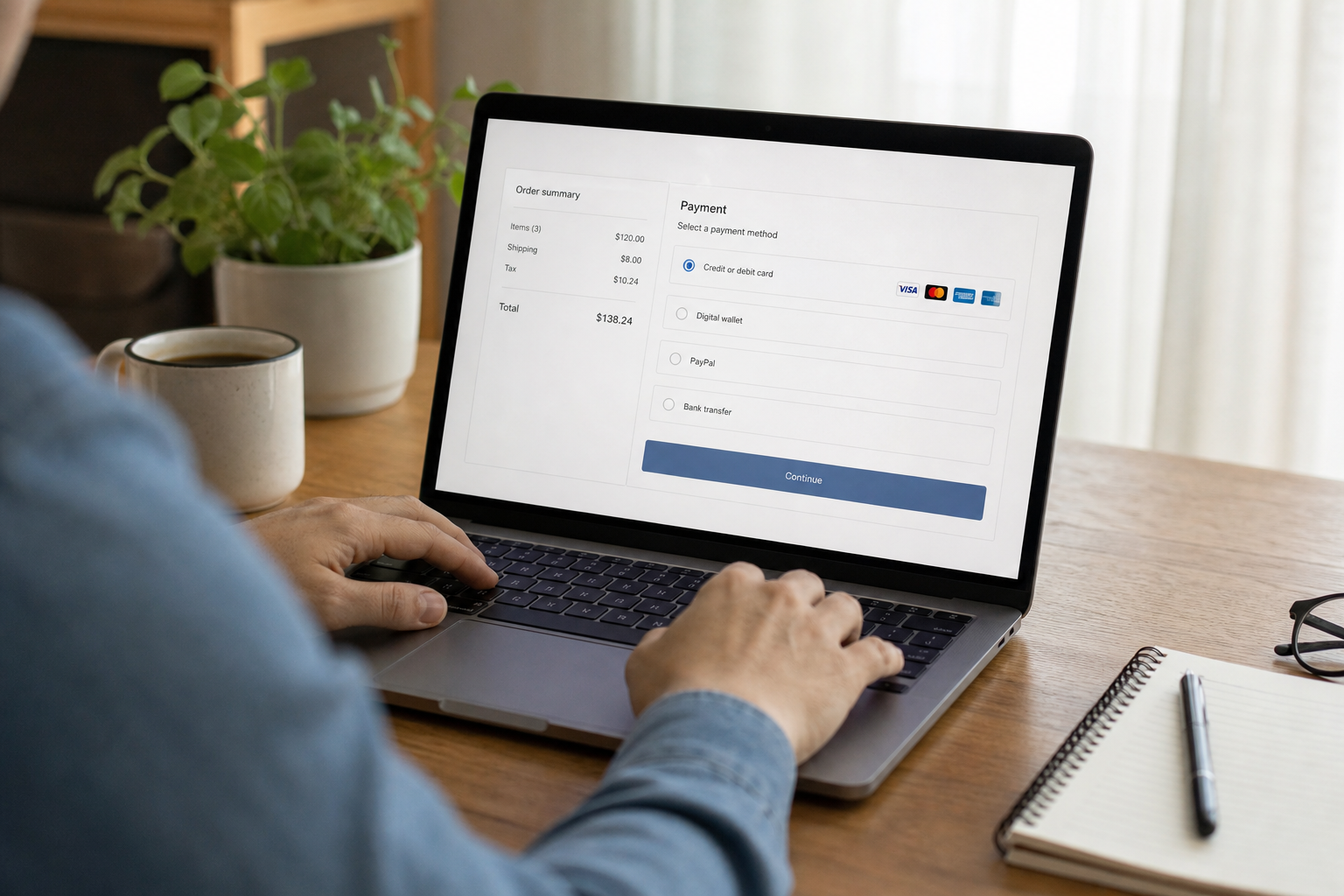
Modern checkouts now sit ACH next to wallets and other payment options.
Where ACH Fits in a Wider Payment Stack
ACH is one tender among many. Consumers now expect choice, including digital wallets, crypto, and installment payments. In contrast, building each new method separately means new integrations, compliance work, and settlement relationships.
Bitoaz addresses that gap. It is an enterprise payments platform that lets payment providers and software platforms add Digital Assets (crypto), Digital Wallets, and Buy Now Pay Later to existing infrastructure. Customers pay through a hosted checkout. Bitoaz manages acceptance, conversion, compliance, and settlement, and merchants still receive U.S. dollars.
Payment method availability varies by region and partner. For related reading, see one integration, multiple payment methods and the overview of checkout complexity for scaling businesses.
Compliance and Risk Management
Any provider adding payment methods needs strong controls. Our guide to a SOC 2 compliant payment platform explains what to look for.
Options for Partners
Integration partners connect once through documented APIs. Distribution partners extend these capabilities across their merchant networks. Details are in the partner program overview. Bitoaz serves partners in Greater Phoenix, the East Valley, and beyond.
Frequently Asked Questions
What are automated clearinghouse services?
Automated clearinghouse services are electronic systems that batch and route bank-to-bank credits and debits in the United States. They power direct deposit, bill pay, and recurring bank payments.
What does ACH stand for?
ACH stands for Automated Clearing House. It is the network that moves electronic funds between U.S. bank accounts.
Who runs the ACH network?
Nacha manages the rules for the ACH network. The Federal Reserve and The Clearing House act as ACH operators that process the transactions.
How long does an ACH payment take?
Standard ACH typically settles in one to two business days. Same Day ACH is also available through participating banks at set processing windows.
What is the difference between an ACH credit and an ACH debit?
An ACH credit pushes funds from the payer to the receiver. An ACH debit pulls funds from the payer’s account after authorization.
How do ACH payments differ from card payments?
ACH moves money directly between bank accounts, while cards run on card networks. ACH is batch-based and often costs less, but it can have longer return windows.
What does an ACH return mean?
An ACH return means the receiving bank rejected the entry, for example because of insufficient funds or a closed account. Each return carries a reason code.
What are common mistakes with ACH?
Common mistakes include weak authorization records, skipping account validation, and ignoring return rates. Each can raise risk and cost.
Is ACH secure?
ACH has security requirements set by Nacha rules, including protection of account data. Security still depends on how each business and provider handles that data.
How much do automated clearinghouse services cost?
Pricing varies by provider, volume, and risk profile. Request a written fee schedule that covers per-transaction fees, returns, and any monthly charges.
Can a payment platform offer ACH alongside other payment methods?
Yes. Many platforms offer bank transfers next to cards, digital wallets, and other methods. Partners can also add newer tenders through one integration.
How does Bitoaz relate to automated clearinghouse services?
Bitoaz does not replace ACH. It helps payment providers and platforms add Digital Assets, Digital Wallets, and Buy Now Pay Later, with merchants still settled in U.S. dollars.
Conclusion
Automated clearinghouse services give businesses a low-friction way to move money between banks, but they work best with clear authorization, return monitoring, and a realistic view of timing. As consumer expectations grow, ACH becomes one part of a broader payment mix. Payment providers and platforms that want to add crypto, digital wallets, and BNPL without rebuilding their stack can talk to Bitoaz or call 1-833-611-0969.
